Sections: Information | Covers
Information
- Published by:
- Rowohlt, 1987
- Language: German
- Read by: Eva Mattes
- Contains:
- “Die Wirtin”
- “Der Weg zum Himmel”
- “Mrs. Bixby und der Mantel des Obersten”
Covers
-
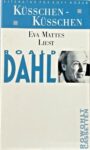
- Rowohlt, 1987
Sections: Information | Covers
Sections: Information | Covers

Sections: Information | Research
In 2017 two Dahl-related screenplays with accompany musical scores were offered for auction via Charlton Hall Gallery in South Carolina. The works came from the estate of Arturo Peralto-Ramos II, the son of famous American socialite Millicent Rogers. Rogers had famously had an affair with Roald Dahl starting in 1944, and the two of them exchanged many gifts. My initial theory was that Dahl had gifted her with the works sometime in the 1950’s. The works were purchased at auction for $240 USD.
The auction lot consisted of a typed screenplay of “The Great Automatic Grammatizator” (adapted by Jean-Philippe Carson; a handwritten musical score (sketch) of “The Great Automatic Grammatizator” by Thomas (Tommy) Tycho; a typed screenplay of “Skin” (adapted by Jean-Philippe Carson); and a handwritten musical score (two piano scores) by Béla Dolesko. Photographs of the covers of the screenplays include the text:
One of three short stories to be filmed as one full feature by Peramco Film Corporation, Inc, in England, October, 1953.
Intriguingly, the photograph of the cover page for “Skin” shows some phantom additional text for the third screenplay titled “Claud’s Dog.” This would no doubt have been one of the four “country” stories from Someone Like You, but I’ve not been able to find out which one.
Obviously this film was never made. I have spent several hours trying to find out what happened. I haven’t been able to find any references to the film online (other than pages related to the auction) or in any of the Dahl biographies. My current theory is that “Peramco Film Corporation, Inc.” was a company run by Arturo Peralto-Ramos out of 325 East 72nd Street in New York City. I have found a single citation for this in a now-deleted Wikipedia edit that claims in 1951 the polo player Norman Butler “became one of the Directors of the Peramco Film Corporation Inc. located in New York City at 325 East 72nd Street, alongside Millicent Rogers and Arturo Peralta Ramos Jr.” The Wikipedia editor who added that text cited the 1956 edition of Who’s Who in America, which I can’t fully access to verify. But it seems plausible that the company was run by Millicent’s son (especially given that “Peramco” combines the first syllables of “Peralta” and “Ramos”), and that he would have either asked Dahl for permission to adapt these works or hoped to parlay his mother’s relationship with Dahl into permission. That also explains how the screenplays ended up in the estate auction.
If anyone has any other information on this topic, please get in touch!
Sections: Information | Fun Stuff
Sections: Information | Fun Stuff | Covers
Sections: Information | Fun Stuff | Covers
Sections: Information | Fun Stuff | Covers
Sections: Information | Controversy | Text
From Wikipedia:
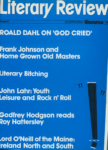
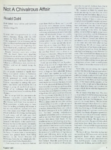
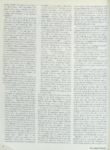
A 1983 review of the book by Roald Dahl, published in the Literary Review, caused a “small outcry.” Under the title “Not a Chivalrous Affair,” Dahl compared the then-current war in Lebanon (which he described as “deliberate mass murder”) to Dahl’s own service in Palestine during WWII. Remarking on the “authentic tales of horror and bestiality throughout this book,” Dahl asked of the war, “[W]hy in heaven’s name did not somebody influential in America shout ‘Stop'[? …] Is the American President and the Senate and the Congress so utterly dominated by the great Jewish financial institutions over there that they dare not defy them?” Dahl concluded that “on the whole […] the great Jewish communities outside Israel cared very little about what was going on [in Lebanon],” and rhetorically asked: “Must Israel, like [Nazi] Germany, be brought to her knees before she learns how to behave in this world?” The review was widely perceived as antisemitic, a perception only deepened by Dahl’s subsequent public statements in defense of his position. Events surrounding the reception of this review were dramatized in Mark Rosenblatt’s 2024 play Giant.
Original Magazine Pages
Sections: Information | Fun Stuff | Box Cover