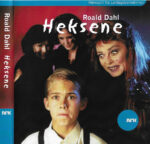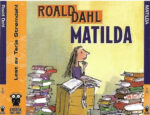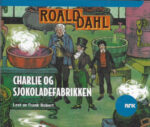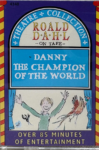
Sections: Information | Covers
Information
- Published by:
- NRK Lydbokforlaget, 1999
- Language: Norwegian
- Read by: Frank Robert
- Translated by: Oddmund Ljone
- Runtime: 2 hrs 58 min
- Based on:
Covers
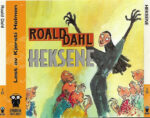
- NRK Lydbokforlaget, 1999
Sections: Information | Covers
Sections: Information | Fun Stuff | Covers
Sections: Information | Cast | Covers
Sections: Information | Covers
Sections: Information | Description
Camera Three was an American anthology series devoted to the arts. It began as a Sunday afternoon local program on WCBS-TV in New York before moving to the network on CBS. It aired from January 22, 1956, to January 21, 1979, and then moved to PBS in its final year to make way for the then-new CBS News Sunday Morning, which incorporated regular segments devoted to the arts. The PBS version ran from October 4, 1979, to July 10, 1980.
Sections: Information | Covers
Sections: Information | Fun Stuff | Covers
Sections: Information | Plot Description | Fun Stuff
Spoiler warning! The year is 1946 and an old man named Drioli shuffles across the Parisian street in the freezing cold. He stops before a picture gallery to admire the painting in the window… and suddenly recognizes the name of the artist. “Chaim Soutine… My little Kalmuck, that’s who it is!” Drioli remembers a night thirty years before, when he had come home from his tattoo parlor flush with cash and bearing bottles of wine. The boy (Soutine) had been painting a picture of Drioli’s wife, with whom he was infatuated. The three of them get very drunk and Drioli comes up with an idea – he wants the boy to paint a picture on his back and then tattoo over it! The boy only agrees when Drioli’s wife Josie says she will pose for the picture. It takes all night, but eventually the picture is finished and signed. Not long after, the boy disappeared and they never saw him again. Josie died during the second World War and Drioli’s tattooing business collapsed. Now, in the present, he is reduced to begging in the streets. He decides to go in and see the other Soutine pictures on display. The gallery workers try to throw him out, but before they can he takes off his shirt and shows the crowd his tattooed back. They are amazed and immediately several men offer to buy the painting from him. Eventually Drioli is faced with a choice: one man offers to pay for a major skin-grafting operation, while another simply asks Drioli to come live at his hotel (the Bristol in Cannes) and exhibit the painting to his guests. Drioli chooses the latter and goes off to dinner with the man. Not long after, a strange painting by Soutine shows up for sale in Buenos Aires. And, the narrator tells us, there is no hotel called the Bristol in Cannes.