Charlie and the Chocolate Factory

Sections: Information | Platforms


Information

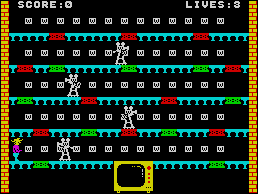
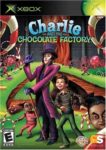
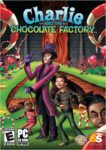
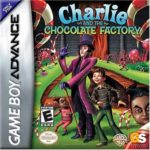
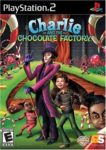
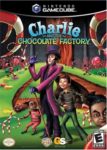
  • Charlie and the Chocolate Factory is a 2005 video game which was released on the Xbox, PlayStation 2, GameCube, Game Boy Advance, and Microsoft Windows platforms. It is based on the film of the same name by Tim Burton. The game was released in the middle of the year to coincide with the release of the film in theatres.

Platforms


Charlie and the Chocolate Factory: The Ride

Sections: Information | Description | Videos


Information

  • Location: Cloud Cuckoo Land in Alton Towers, Staffordshire, England
  • Note: The ride is currently under refurbishment for the rest of 2016!
  • More information…

Description

Charlie and the Chocolate Factory: The Ride is a dark ride located in the Cloud Cuckoo Land area of Alton Towers theme park, Staffordshire, England. It is based upon the famous Roald Dahl book of the same name, and takes its thematic inspiration from the illustrations of Quentin Blake. The ride is split into two segments, the first being a boat ride along the chocolate river inside Willy Wonka’s Chocolate Factory. Passengers encounter all the characters from the book (going from Augustus Gloop to Veruca Salt) either as simple animatronics or CGI projections. After disembarking the boats the second segment begins with a short pre-show video (involving Mike Teavee). The video is presented as if the viewers are actually trapped within the TV set. The ride continues inside one of two “Great Glass Elevators” which simulate passengers taking an airborne trip through the rest of the factory. Each elevator is a static room with semi-translucent walls and ceiling on which CGI animations are projected from the outside, and only the floor trembles slightly to give the impression of movement.


Videos


Roald Dahl’s Willy Wonka

Sections: Information | Description | Soundtrack Covers


Information

  • Adapted by Tim McDonald and Leslie Bricusse
  • Published by: Music Theatre International

Description

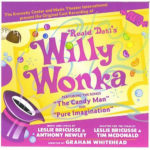
Roald Dahl’s Willy Wonka is a musical play that combines elements of both Roald Dahl’s book Charlie and the Chocolate Factory and of the 1971 movie Willy Wonka & the Chocolate Factory with newly created material. The play has several versions: the original version which premiered in 2004, the Junior version, the Kids version, and the Theatre for Young Audiences version. All are owned by Music Theatre International, the company that owns the Willy Wonka license.


Soundtrack Covers


The Golden Ticket

Sections: Information | Description | Cast/CrewReviews | Listen OnlineCD Cover


Information

  • Opera composed by Peter Ash
  • Productions:
    • Opera Theatre of Saint Louis, June 13, 2010 (World premiere)
    • Wexford Festival Opera, October 2010 (European premiere)
    • Atlanta Opera, March 2012

For more information, see Music Link International.


Description

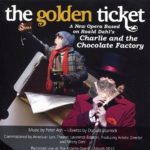
The Golden Ticket is an opera based on Roald Dahl’s classic book Charlie and the Chocolate Factory by the contemporary American composer Peter Ash, with a libretto by Donald Sturrock. The Golden Ticket was commissioned by American Lyric Theater, Lawrence Edelson, Producing Artistic Director; and Felicity Dahl. It premiered at Opera Theatre of Saint Louis on June 13, 2010 in a co-production between OTSL, Ireland’s Wexford Festival Opera, and American Lyric Theater.


Cast/Crew

  • Cast:
    • Charlie: Michael Kepler Meo
    • Willy Wonka: Daniel Okulitch
    • Mike Teavee: David Trudgen
    • Veruca Salt : Jennifer Rivera
    • Lord Salt: David Kravitz
    • Violet Beauregard: Tracy Dahl
    • Augustus Gloop: Andrew Drost
    • Grandpa Joe: Frank Kelley
    • Mr. Beauregard/Grandpa George: Oren Gradus
    • Mrs. Gloop/Grandma Georgina: Kristin Clayton
    • Mrs. Teavee/Grandma Josephine: Mary Ann McCormick
    • Candy Mallow/Squirrelmistress: Jennifer Berkebile
  • Crew:
    • Director: James Robinson
    • Conductor: Timothy Redmond
    • Scenic Design: Bruno Schwengl
    • Costume Design: Martin Pakledinaz
    • Choreographer: Seán Curran

Reviews


Listen Online


CD Cover


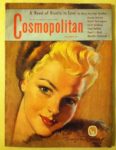
Cosmopolitan (v113 #6)

Sections: Information | Fun StuffCovers


Information

  • Published: December 1942

Fun Stuff


Covers


“Ah! Sweet Mystery of Life, at Last I’ve Found Thee”

Sections: Information | IntroductionPlot Description | Fun Stuff 


Information


Introduction

Roald Dahl introduces this version of the story as if it happened to him!

The other day, when this newspaper invited me to write a short piece on more or less any subject, I declined. I was struggling with a new children’s book, I said, and I find it difficult to switch over from one thing to another. But I had no sooner replaced the receiver when I began to have second thoughts.

The New York Times, I told myself, is read by just about everybody of consequence in the United States, including the President himself. So what a tremendous opportunity this would be to say something of world-shaking importance and to implant the message directly into the minds of powerful men.

But did I have such a message? Nothing in the lead bit trivial would do. Nothing political or witty or smart-aleck. It must, in fact, be something of major benefit to mankind the world over. Something along the lines of Salk and his polio vaccine or Roentgen with his exposed photographic plate or Fleming with that little bacteria-free circle on the watch glass. Something like that.

Well now, I thought. And I went on thinking and thinking and nothing much happened….until suddenly click went a little trigger somewhere inside the head and I cried out, “I’ve got it!” And indeed I had.

For the last 27 ears I have been stewing and brewing about an incident that took place one misty autumn afternoon in a farmyard on the outskirts of the village of Great Missenden, and I have many times wondered where and when I should make the facts known tot he world. This surely was my chance. So here we go. The story is a true one.

Back in 1947 when there was still a postwar shortage of milk in England, we kept a cow in our orchard. The house I was then living in with my mother and my youngest sister is presently owned by Mr. Harold Wilson, the Prime Minister. So this is the orchard. I mention this for a reason. When my story breaks upon the world, thousands of people will flock to Great Missenden to stand and stare at the house where i tall started. And Mr. Wilson, who is no less of an egomaniac than any other politician, will almost certainly think they have come to look at him. He will probably wave to them from an upstairs window and he may even try to make an electioneering speech. If he does, he will be jeered.


Plot Description

This version is slightly different from the later one published in Ah, Sweet Mystery of Life. Claud doesn’t appear at all, for example, and there’s no description of the bull’s, uh, equipment. Dahl also claims that the story is true and happened to him personally in 1947 in Great Missenden.

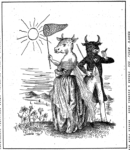
Spoiler warning! Dahl’s cow started “bulling” so he took her down the road to be serviced by Rummins’s bull. Rummins explains he has a unique way of conducting an official mating that no one else in the world knows. Pointing the cow into the sun, he says, means that a heifer (female) will result, while pointing her away creates a bull (male). The actual reason has something to do with the pull the sun exerts on “female” sperm. After Dahl checks the records to verify this claim, he asks Rummins if it will work with people. “Of course it’ll work with humans,” he said. “…I’ve got four boys of my own, ain’t I?”


Fun Stuff


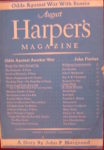
Harper’s Magazine (1944-10)

Sections: Information | ScansCovers


Information

  • Published: October 1944

Scans


Covers


Le Coup du berger

Sections: Information | Description | Watch Online


Information


Description

Le Coup du berger is a twenty-eight-minute short film directed by Jacques Rivette. It stars Virginie Vitry as a wife cheating on her husband (Jacques Doniol-Valcroze). When her lover (Jean-Claude Brialy) buys her a mink coat, the adulterous pair hatch a plan to avoid her husband’s questioning the coat’s origins.

Fool’s Mate is considered by some to be the first film of the French New Wave, or the movement’s earliest antecedent. Released in 1956, the film is something of a curio thanks to a scene in which Rivette and New Wave contemporaries Claude Chabrol, Jean-Luc Godard, and François Truffaut are seen in the same room as party guests.

Note: The film is not actually based on Dahl’s story, but rather on the same apocryphal anecdote that Dahl based his story on.


Watch Online